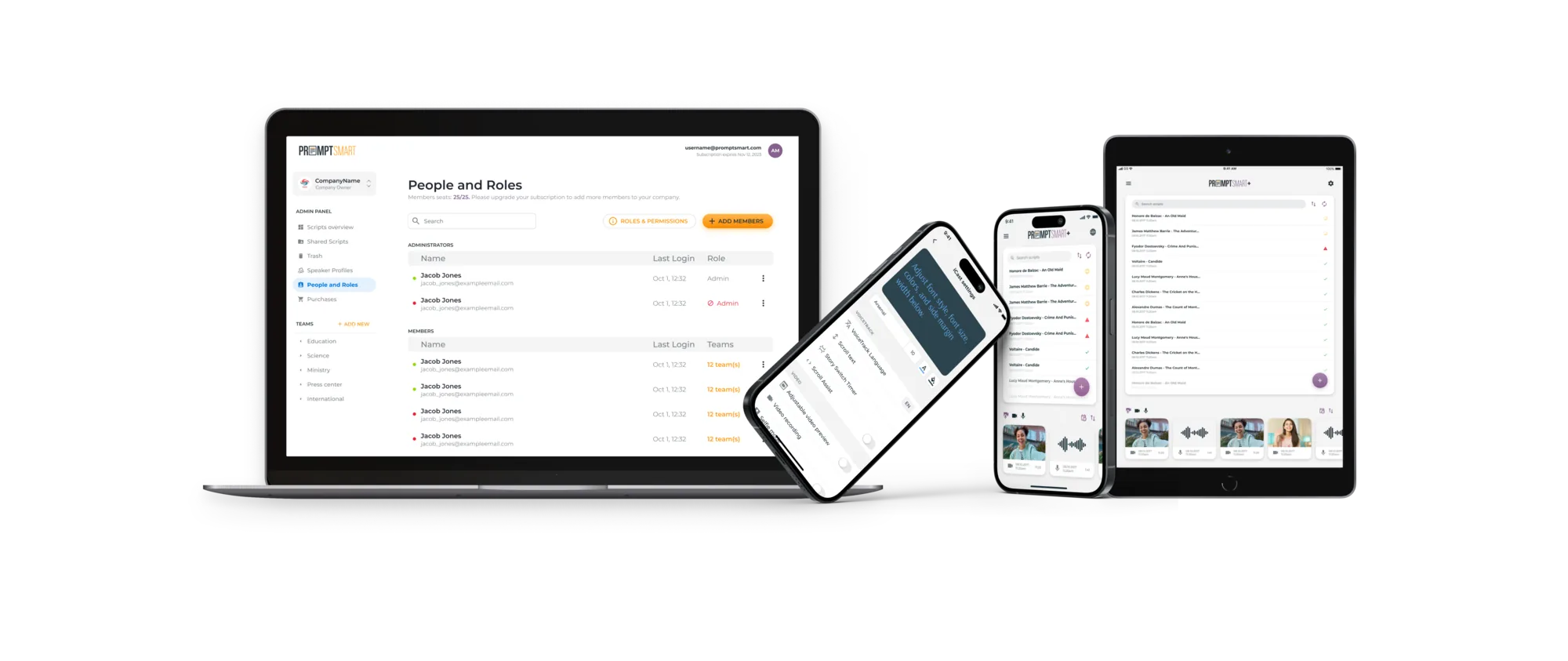
PromptSmart is a teleprompter platform powered by its patented VoiceTrack™ technology, which automatically follows a speaker's voice while scrolling the script.
As the product expanded beyond individual creators and into professional teams and enterprise organizations, new requirements emerged around collaboration, user management, permissions, and subscription administration.
My role was to design an enterprise collaboration ecosystem that enabled organizations to manage teams, content, and access at scale while preserving the simplicity and familiarity that existing users valued.
The goal was to create a flexible platform that could support both individual creators and growing organizations within a single product experience.
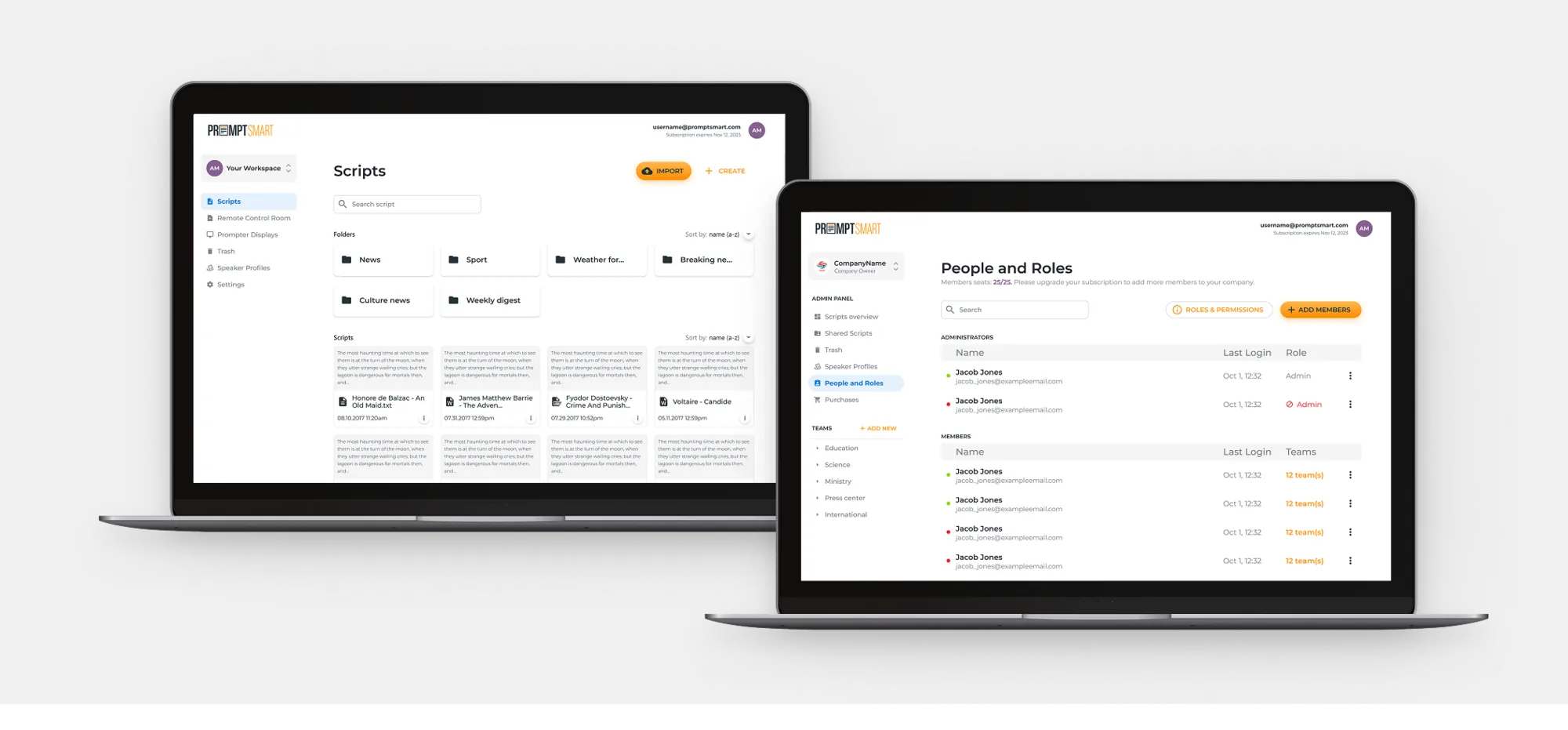
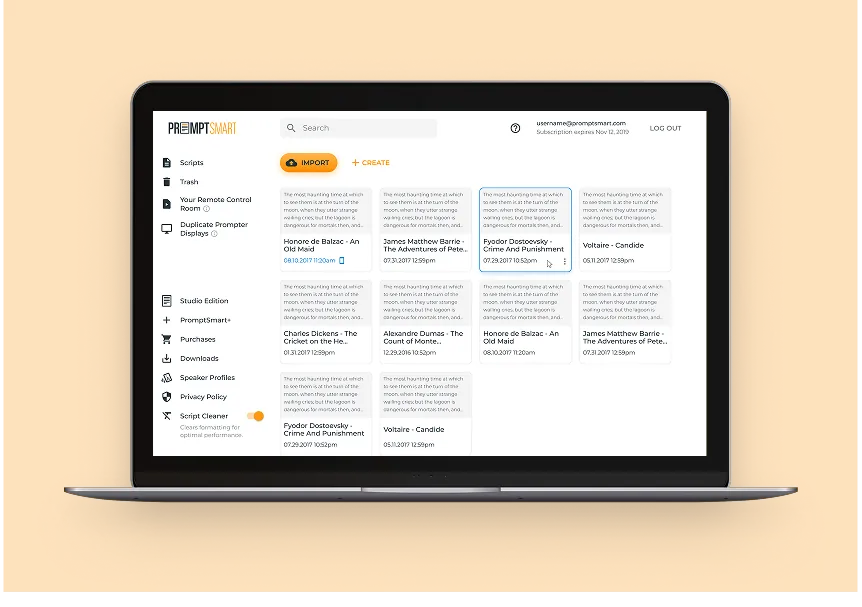

PromptSmart was originally designed for individual creators. As enterprise customers began adopting the platform, the product needed to support shared workspaces, team collaboration, role-based permissions, and centralized administration.
The challenge was introducing these capabilities without increasing complexity for existing users. Many customers had already built extensive libraries of scripts and profiles inside their personal accounts, making trust, access control, and collaboration critical considerations.
The task was not simply adding enterprise features. It was designing a scalable collaboration model that could support both solo creators and multi-team organizations while remaining intuitive and easy to use.
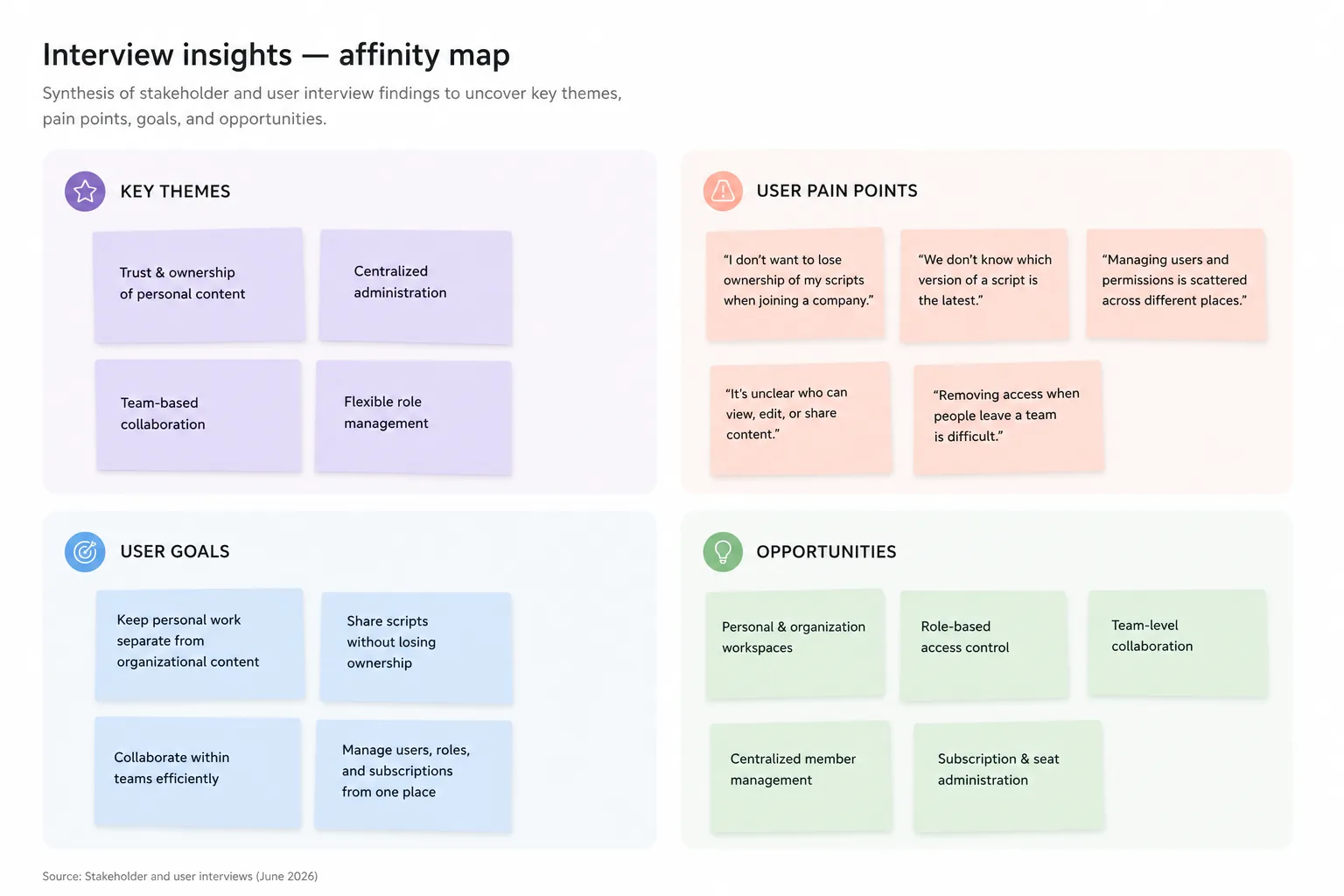
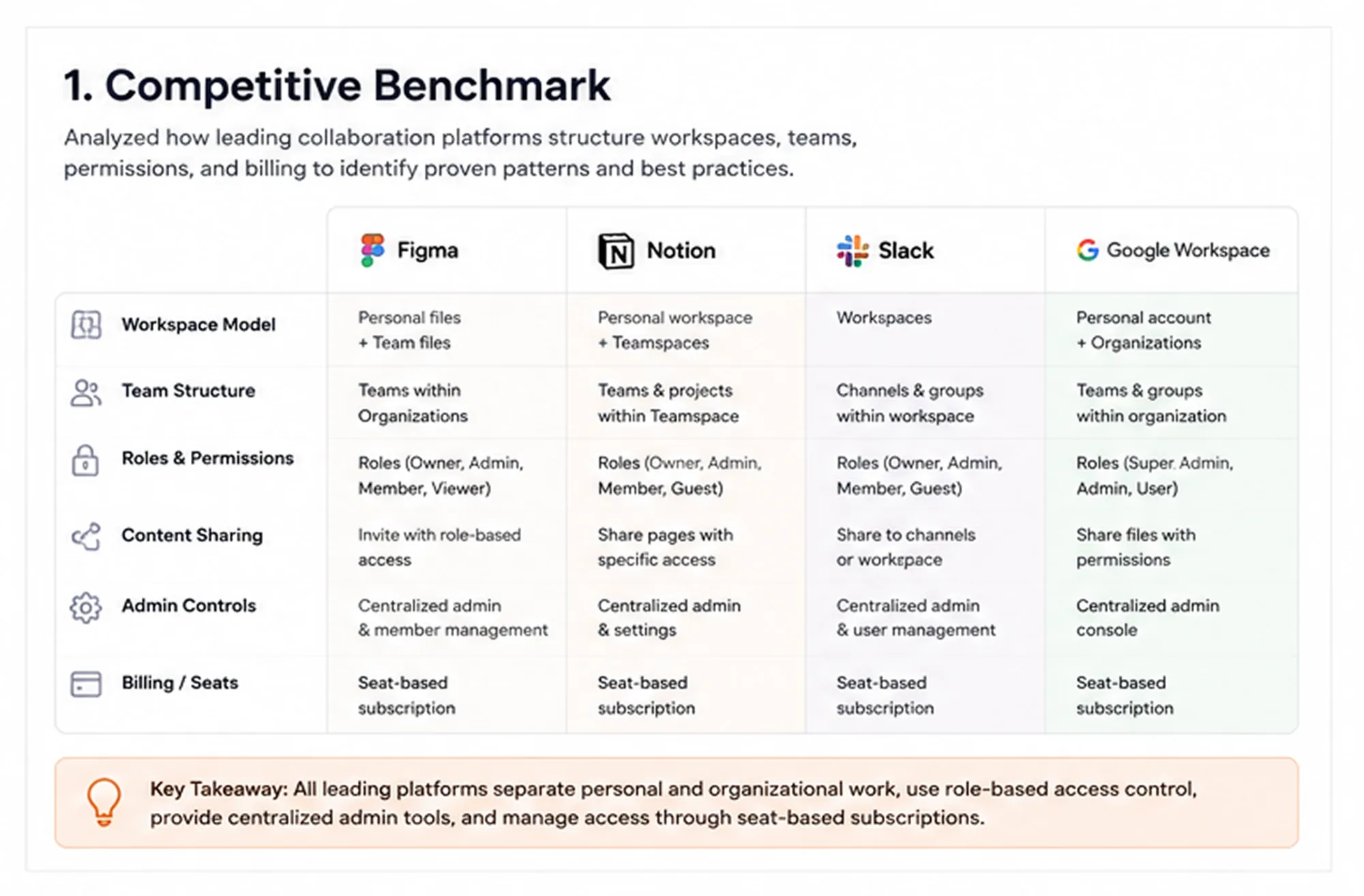
To understand how collaboration platforms scale from individual users to enterprise organizations, I combined competitive benchmarking, stakeholder interviews, and system architecture exploration.
I analyzed collaboration patterns used by products such as Figma, Notion, Slack, and Google Workspace, focusing on workspace structures, permissions, billing models, and team administration.
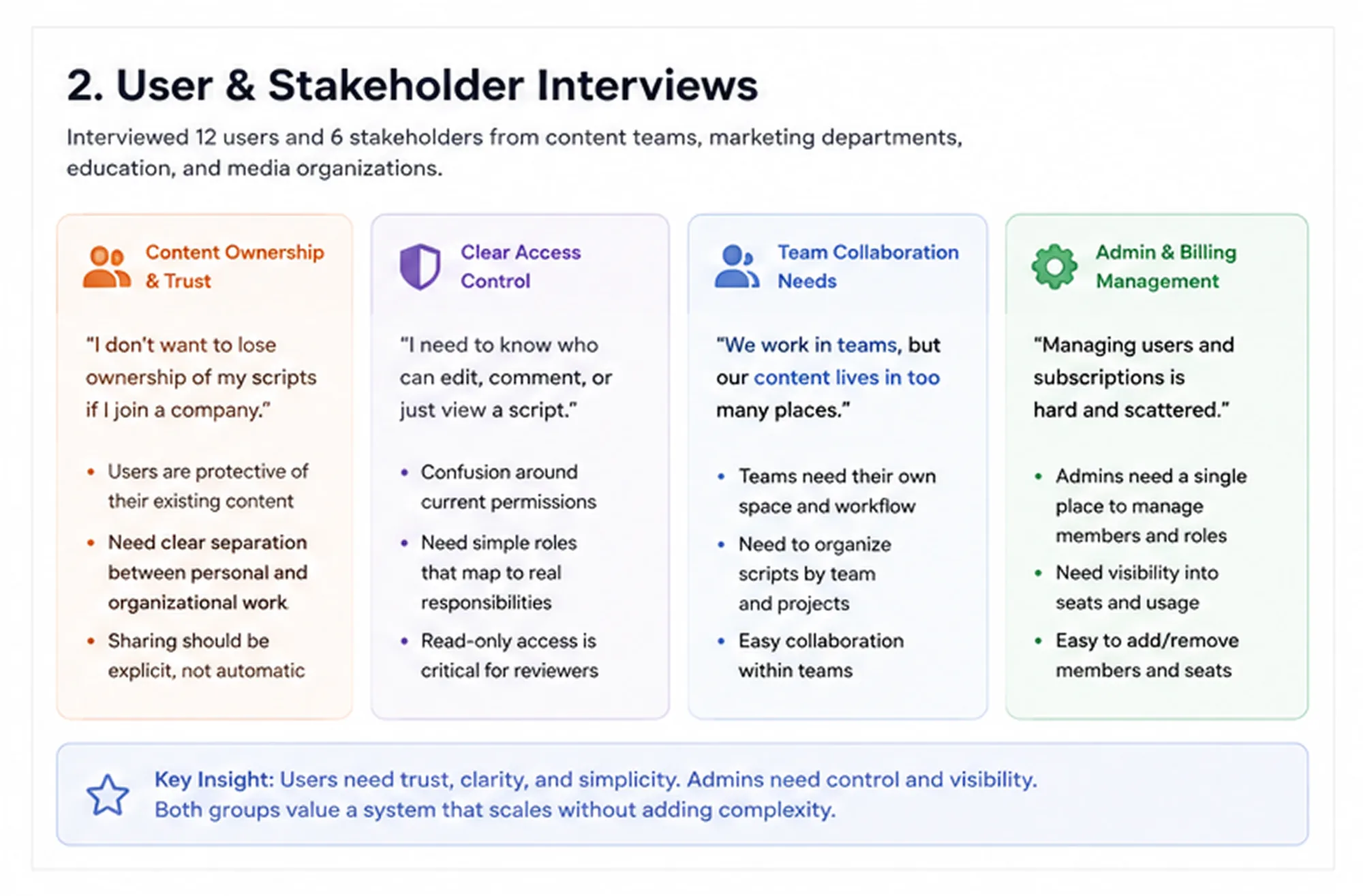
In parallel, I conducted interviews with users and stakeholders to understand how organizations create, manage, and share content.
The research revealed four recurring themes:
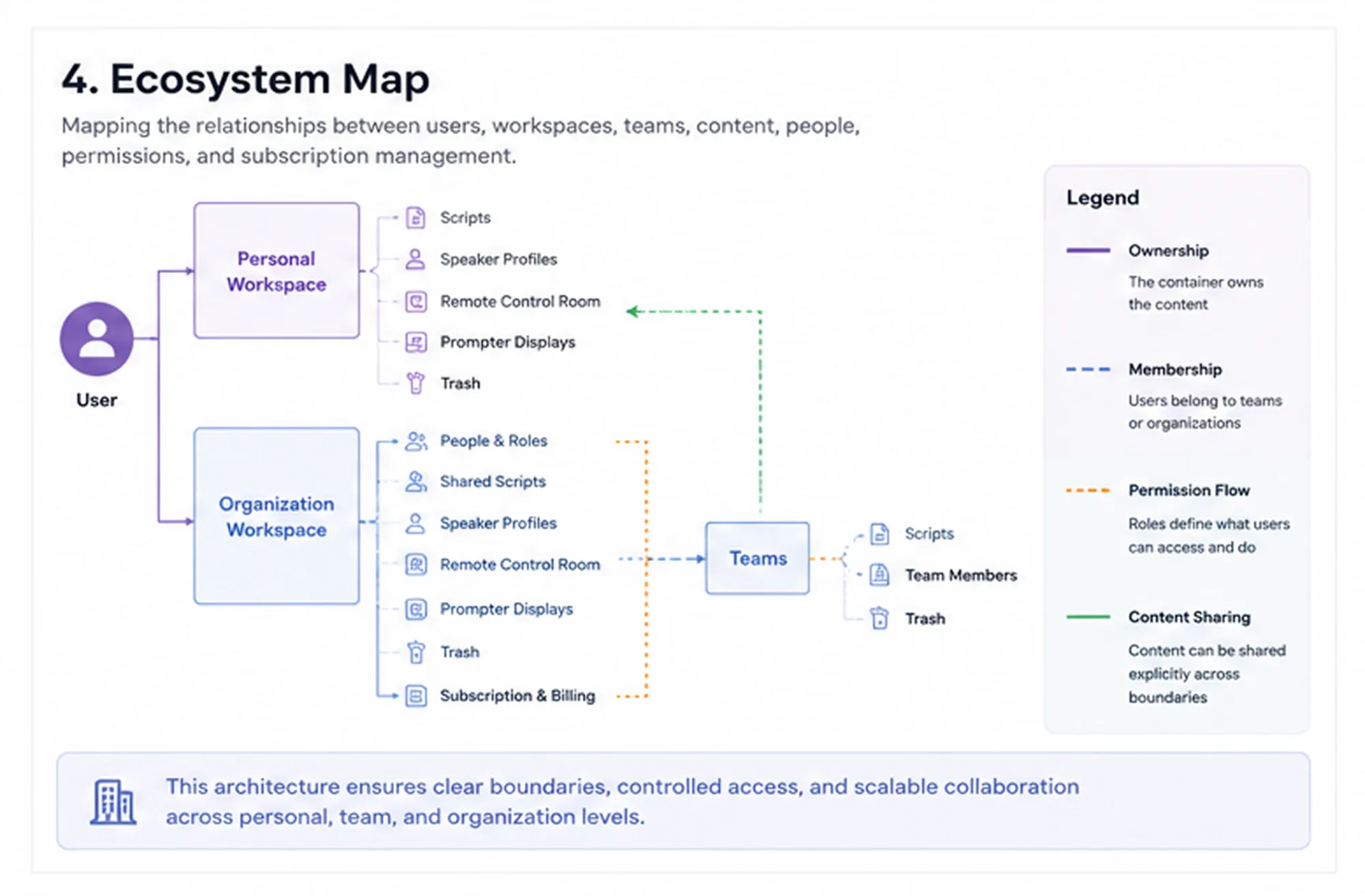
Using these insights, I mapped the relationships between users, teams, permissions, content, and subscriptions to establish a scalable enterprise architecture before moving into detailed interface design.
01. Separate Personal and Organization Workspaces
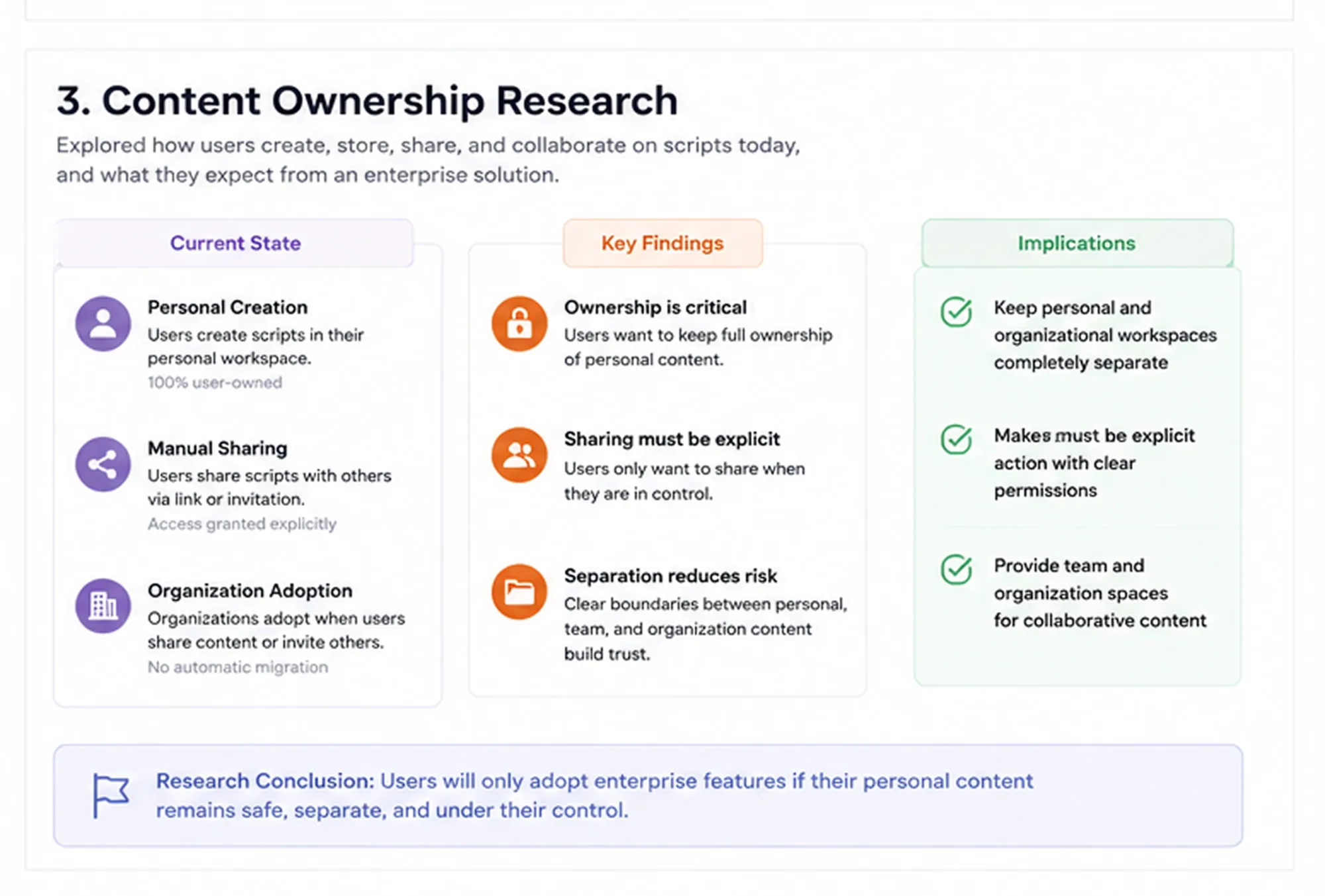
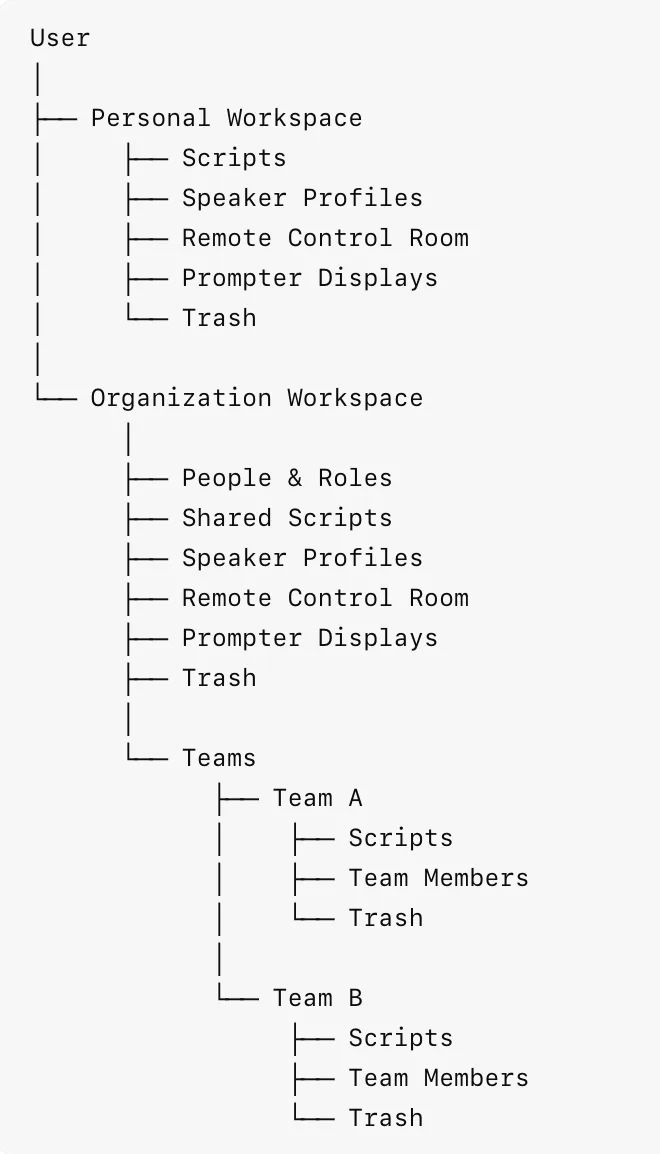
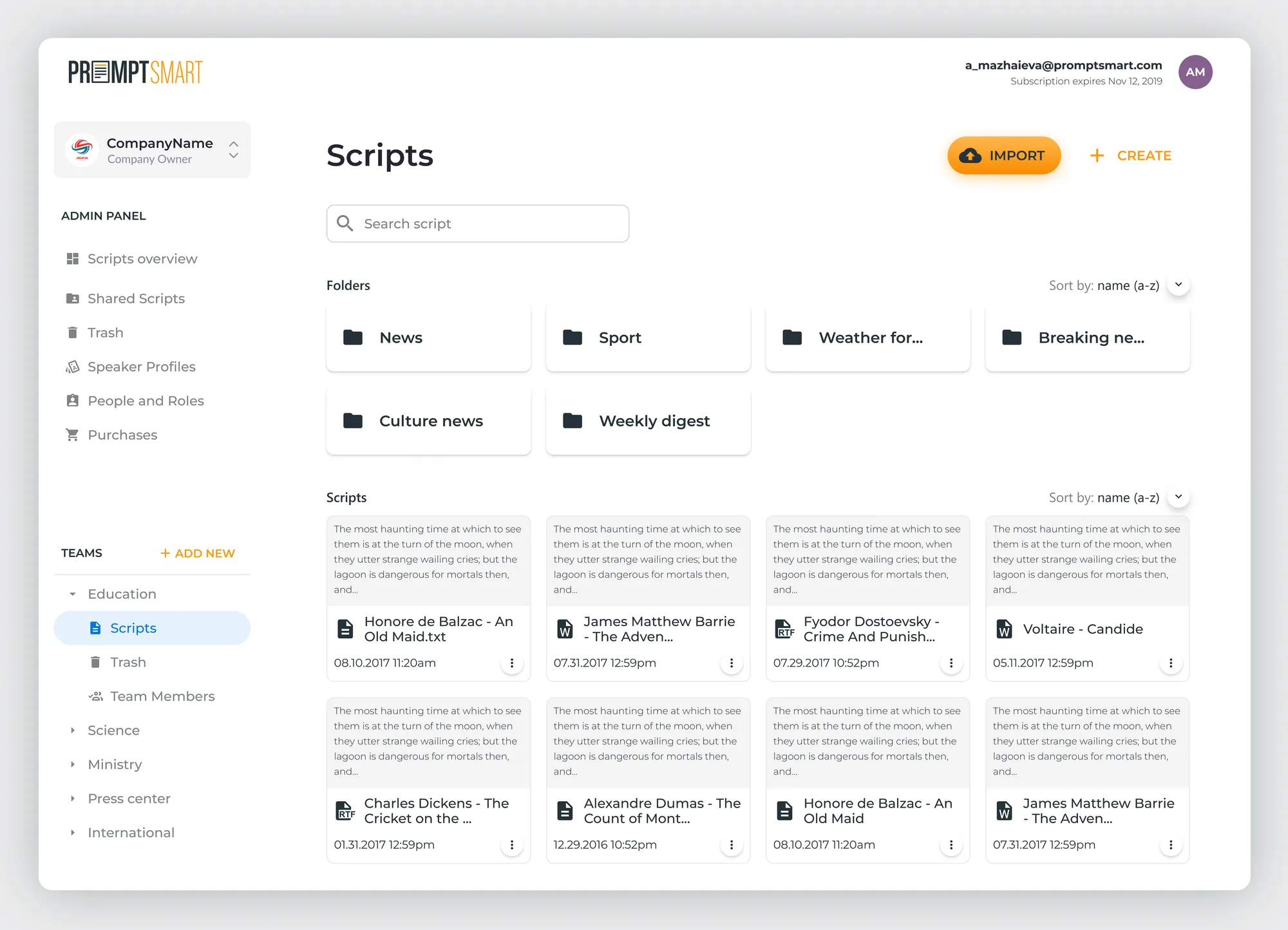
One of the biggest concerns identified during research was content ownership and user trust. Existing users had already built extensive libraries of scripts and projects within their personal accounts and were hesitant to join organizational environments if it meant losing control of their work.
To address this, I introduced a dual-workspace model:
This approach allowed users to adopt enterprise functionality without disrupting existing workflows or compromising ownership of their personal work.
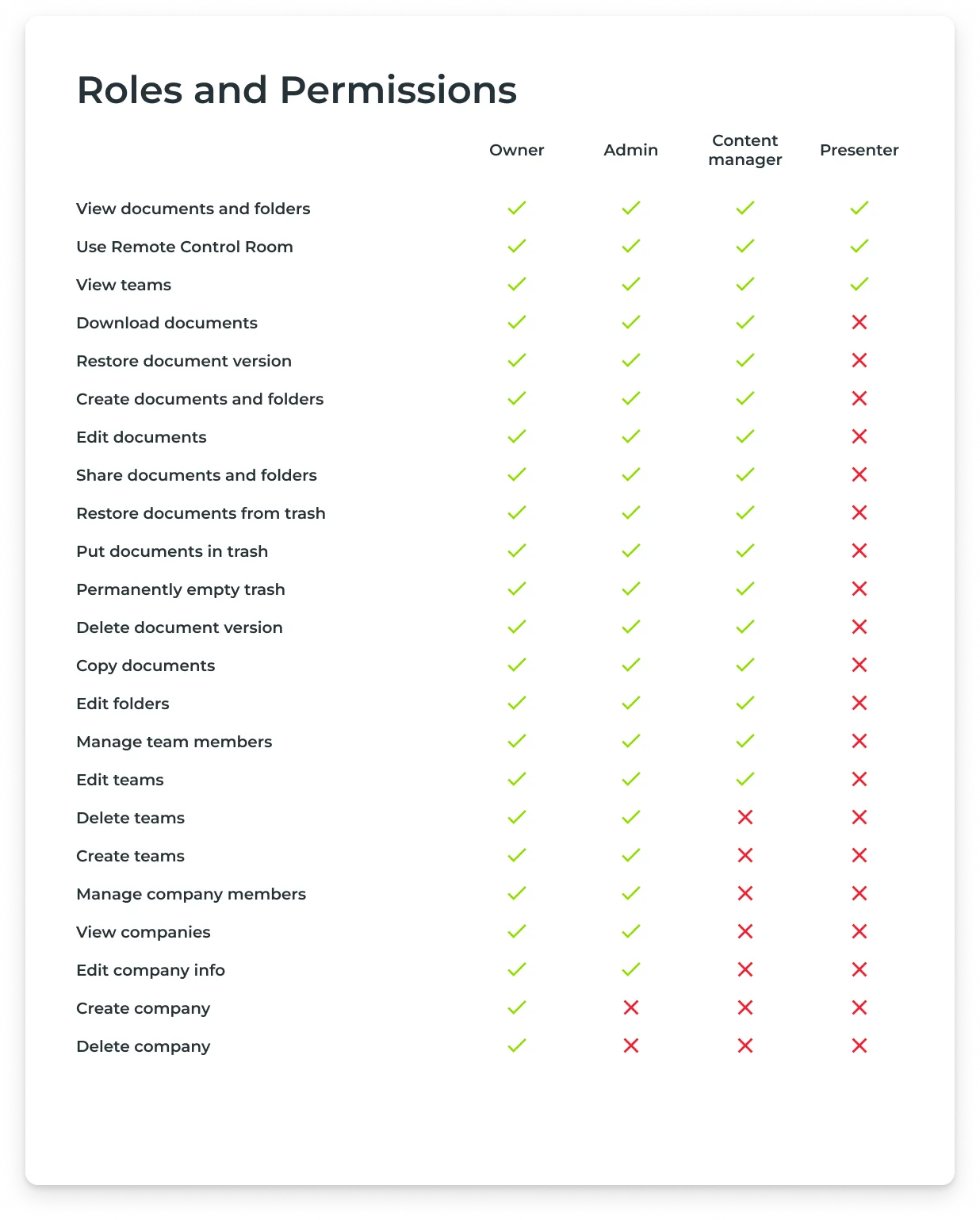
02. Design Around Roles, Not Permissions
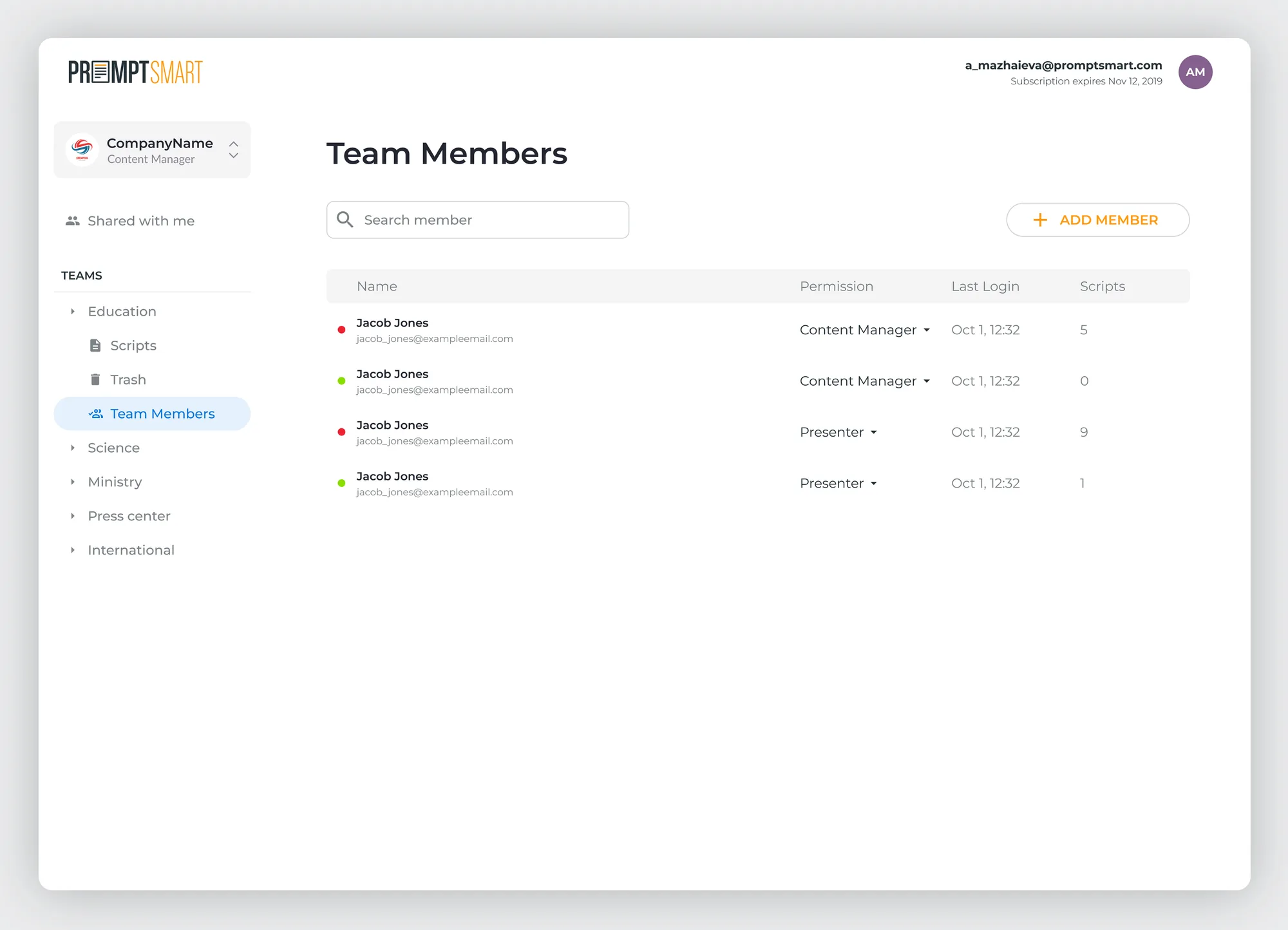
Enterprise products often become difficult to manage when permissions are configured individually. Instead of exposing complex permission settings, I designed the system around clearly defined user roles, each aligned with real responsibilities identified during research.
This made access control easier to understand, easier to manage, and easier to scale as organizations grew.
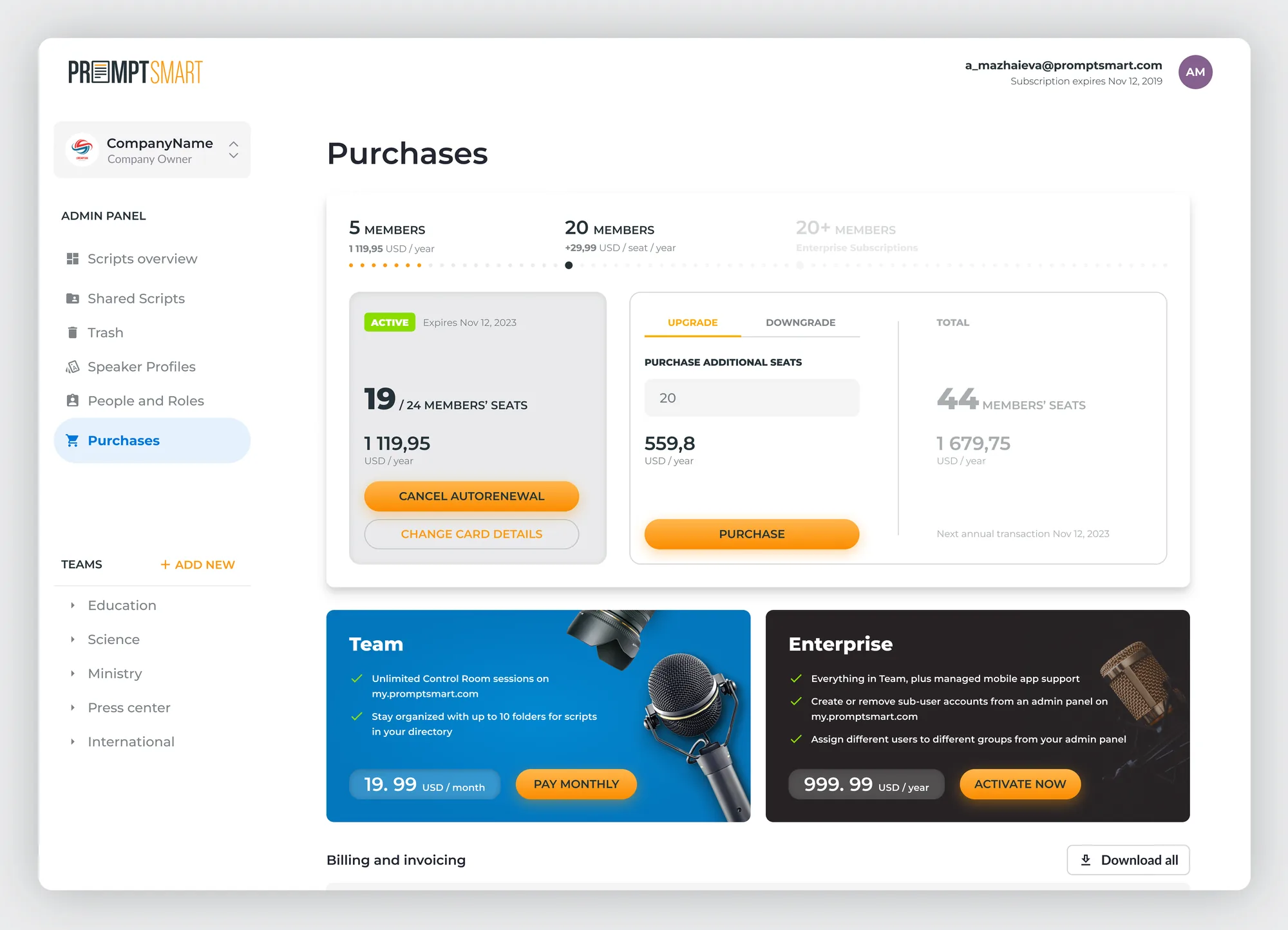
03. Centralize Team Management and Billing
Research showed that administrators needed a single place to manage users, teams, permissions, and subscription seats. To support this, I designed a centralized administration experience where organization owners and administrators can:
This created a scalable foundation for enterprise adoption while keeping administrative tasks simple and transparent.
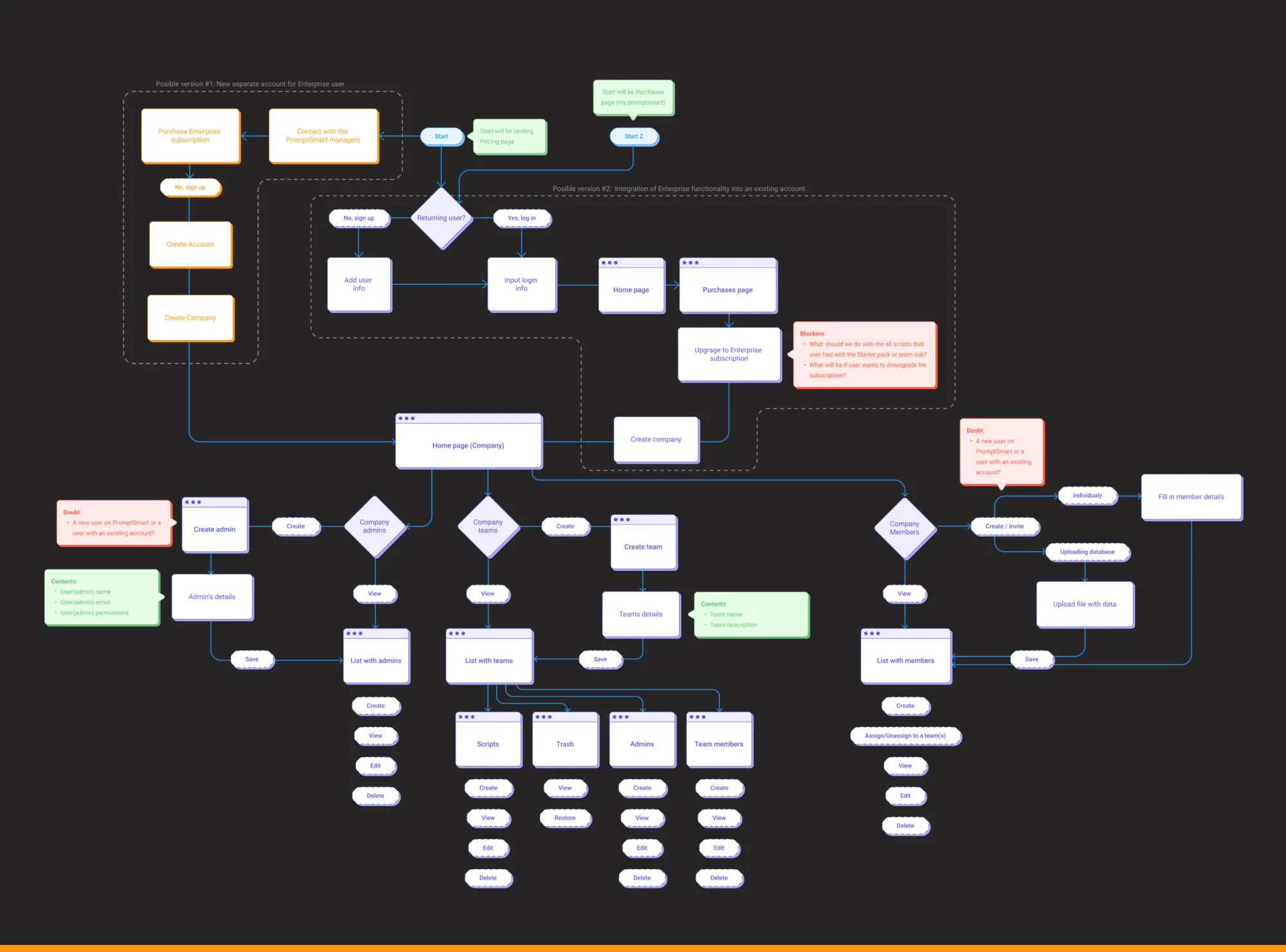
The result was a scalable collaboration ecosystem that enabled organizations to manage teams, permissions, and subscriptions within dedicated workspaces while preserving a familiar experience for individual users.
PromptSmart could now support enterprise adoption without compromising the simplicity of its existing content creation workflow.
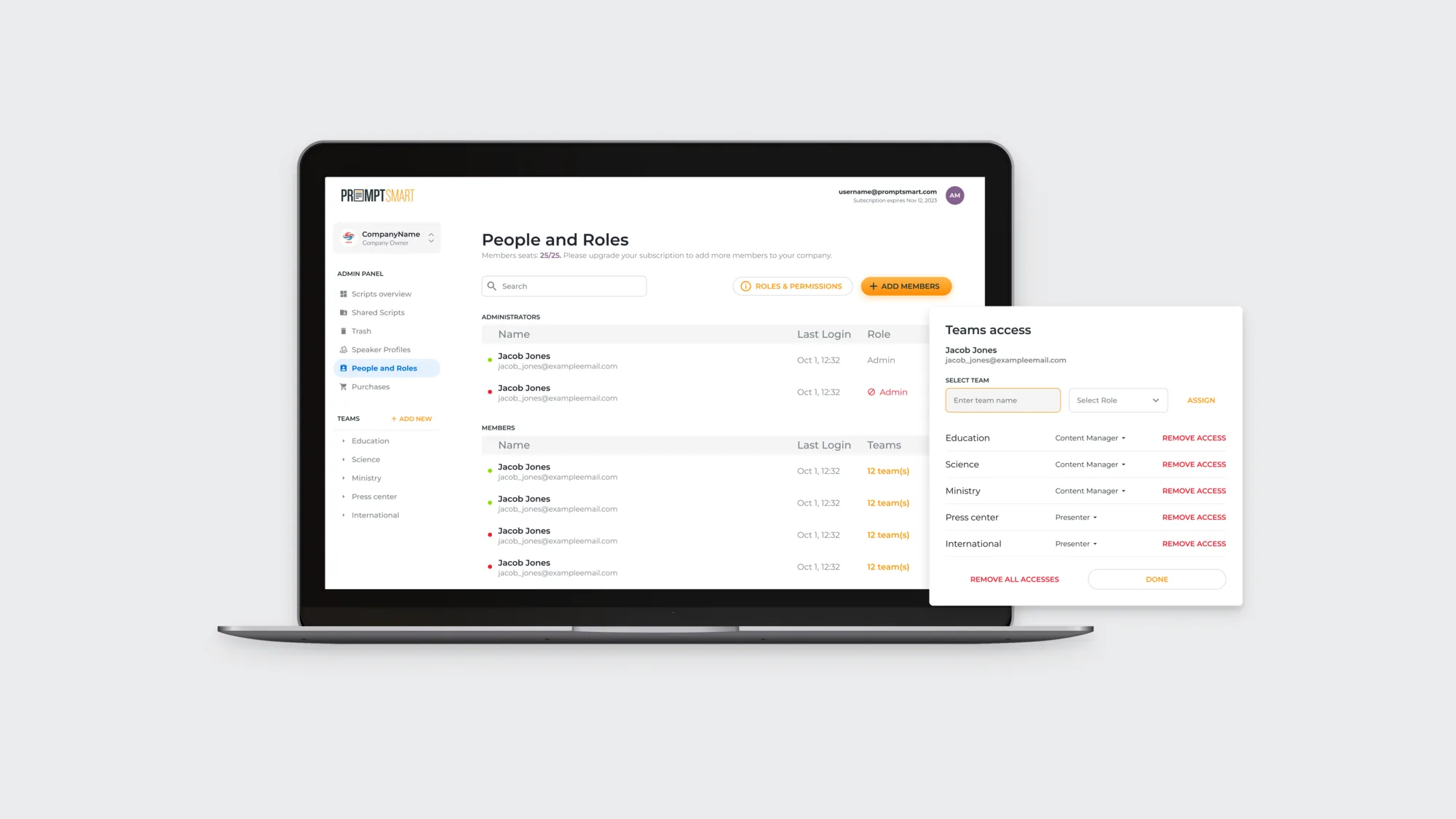
By introducing shared workspaces, role-based access control, content sharing, and centralized subscription management, PromptSmart established the foundation for scalable team collaboration and enterprise growth.
