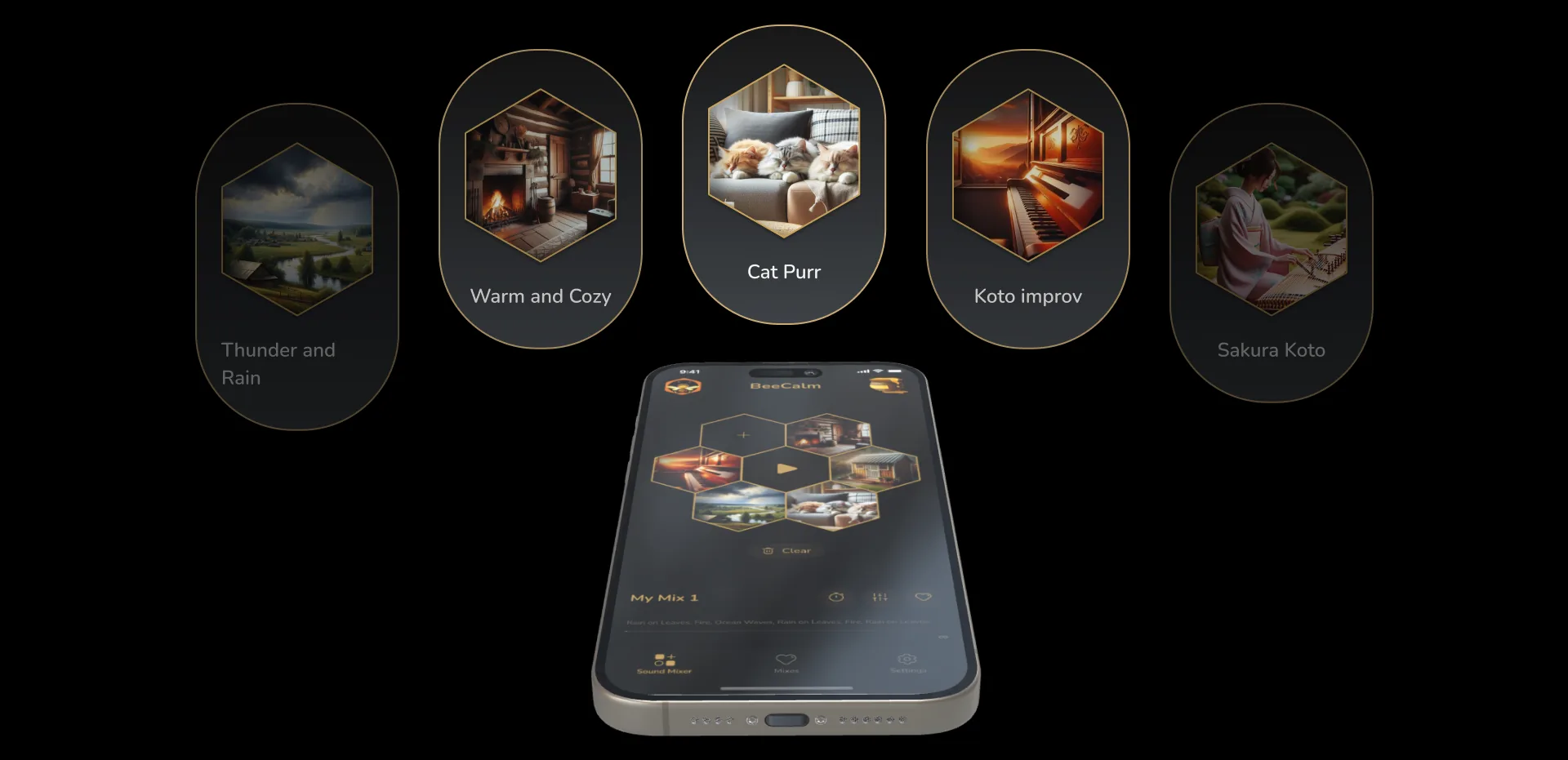
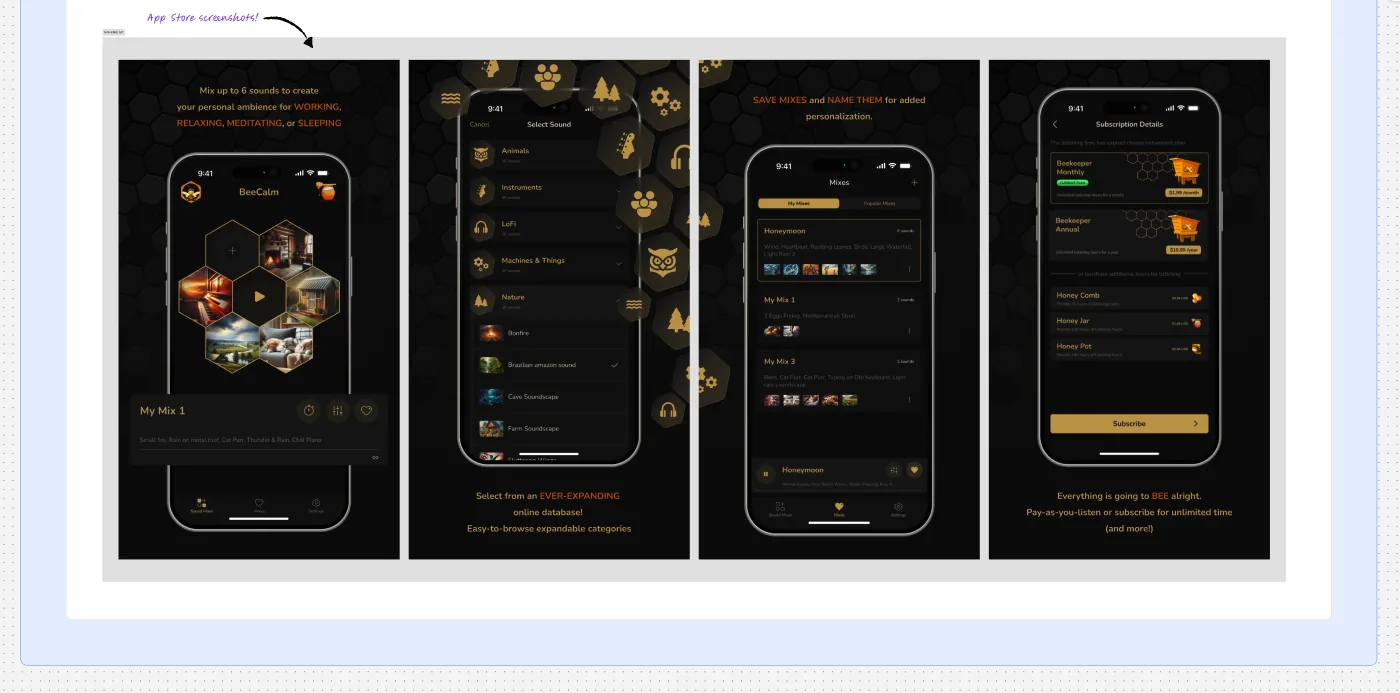
BeeCalm is a wellness app designed to help users relax, improve sleep quality, and build healthier bedtime routines through curated sound experiences.
The product had an established user base but faced low subscription conversion and limited visibility into user behavior. My role was to identify friction points, improve key user flows, and establish the analytics foundation needed for future product decisions.
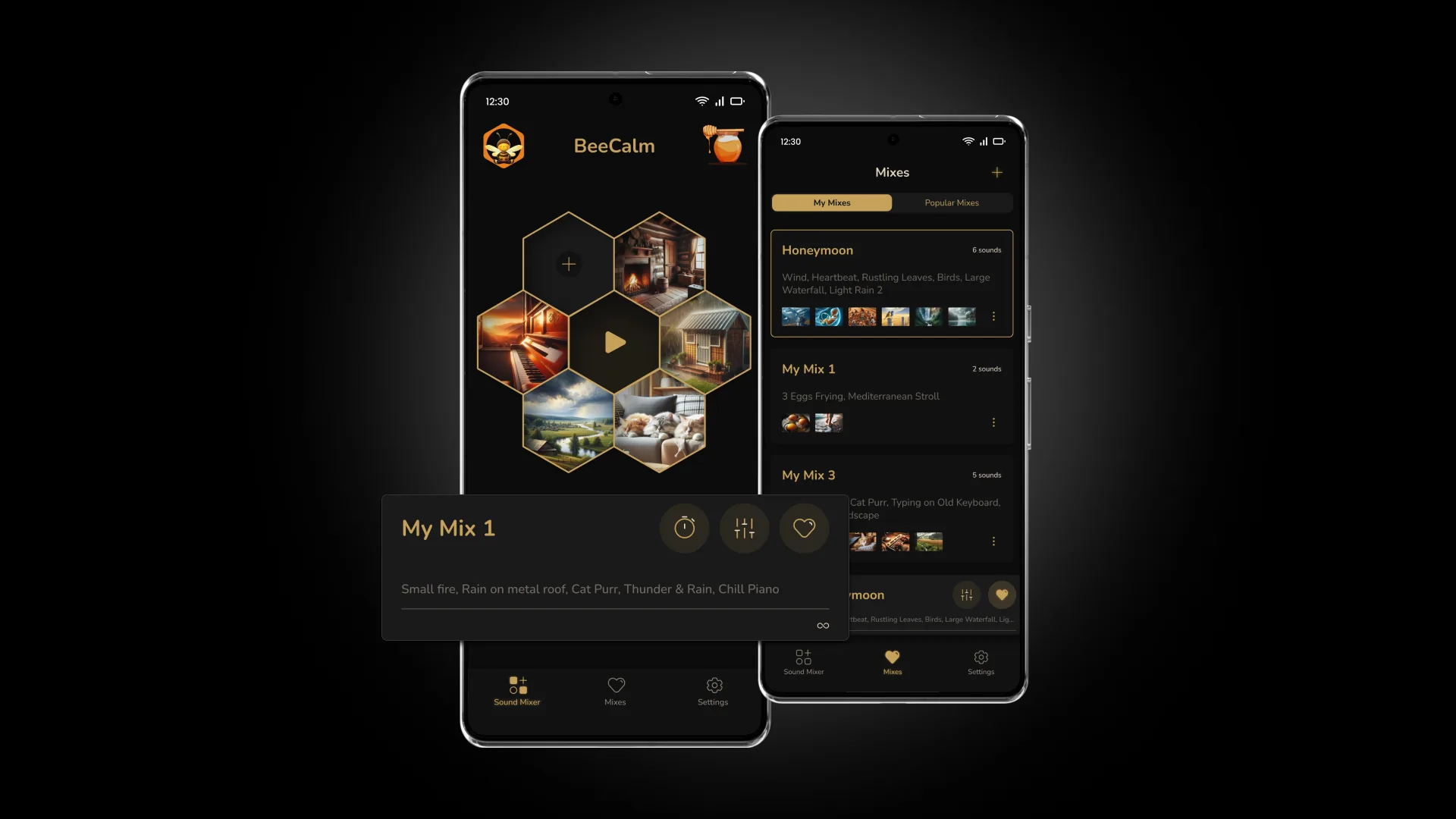

While BeeCalm promised a simple and calming experience, research revealed a disconnect between user expectations and the actual product journey.
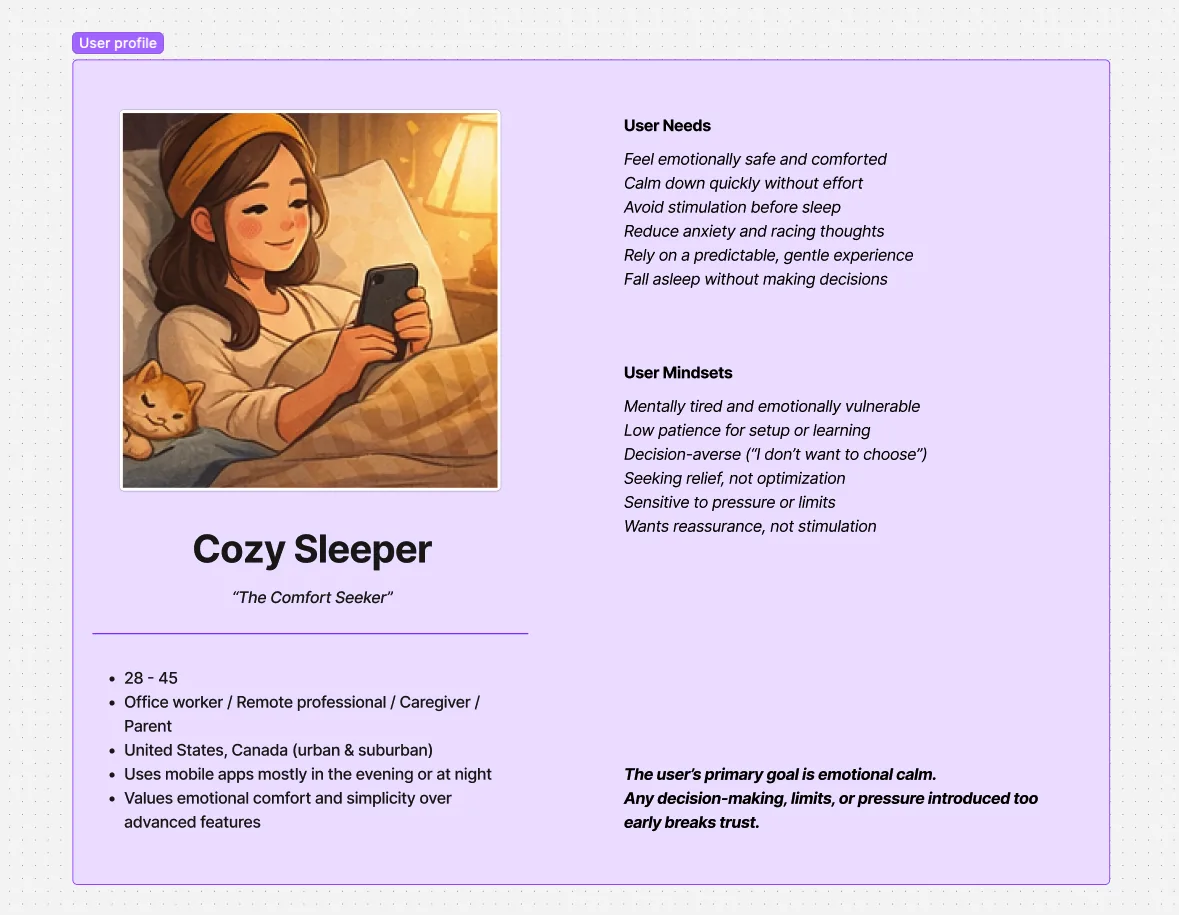
Users primarily came to the app to relax, fall asleep faster, or reduce anxiety. However, they were often required to make decisions around content selection, account creation, and subscription plans at the exact moments when they were seeking the least amount of cognitive effort.
At the same time, the product lacked analytics, making it difficult to understand where users dropped off and which improvements could have the greatest impact on engagement and conversion.
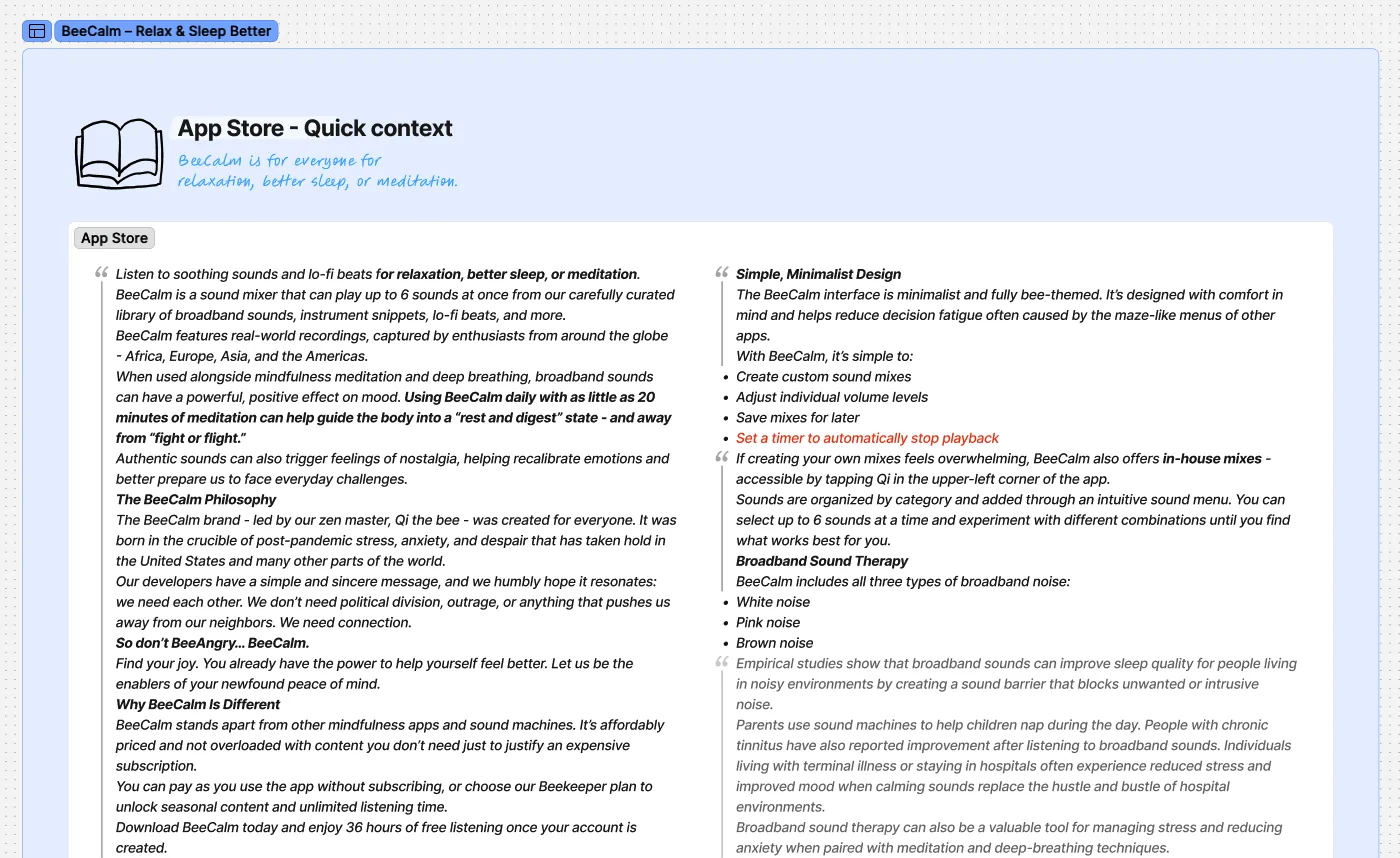
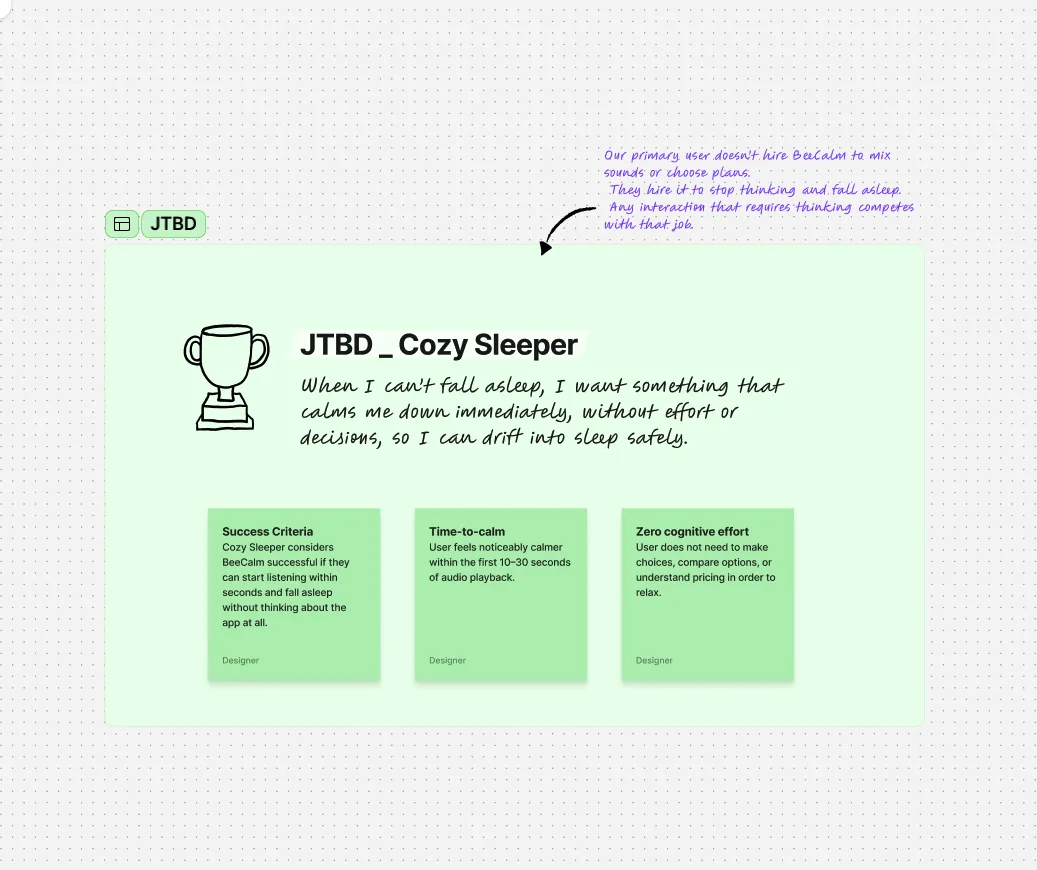
To better understand user needs, I conducted research using Jobs-to-be-Done, personas, journey mapping, and competitive analysis.
The research consistently pointed to a single insight:
Users were not looking for more features. They were looking for fewer decisions.
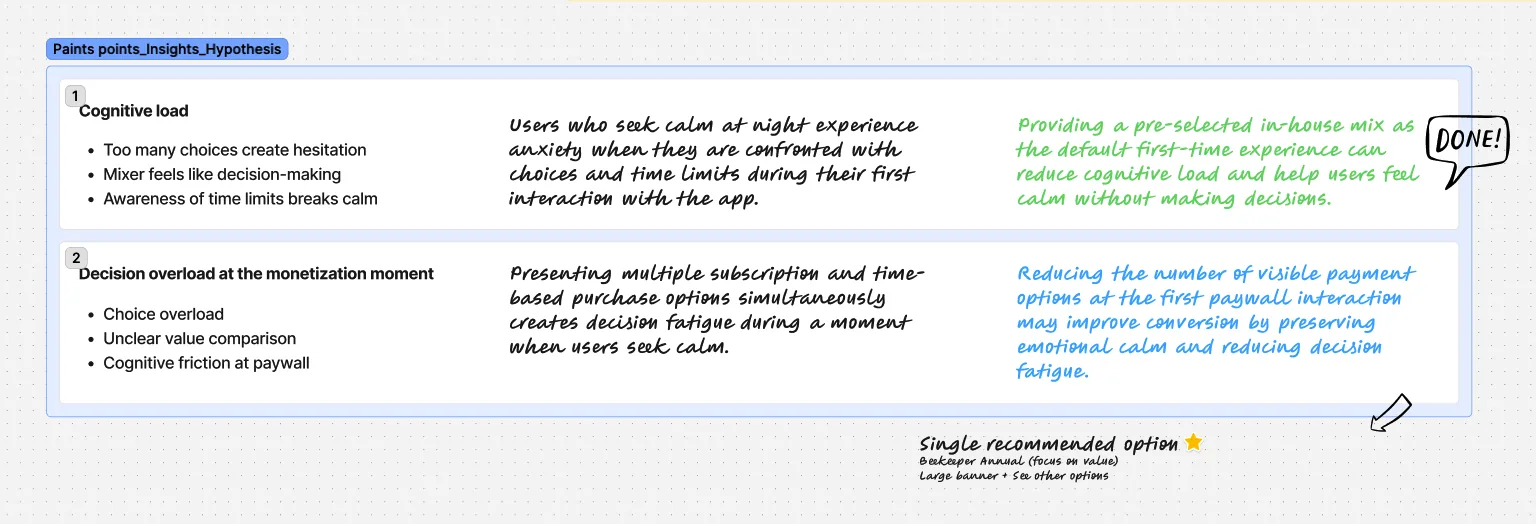
Using these findings, I mapped friction points across onboarding, content consumption, and monetization flows.
Based on the identified opportunities, I redesigned core experiences and collaborated with the team to implement Firebase Analytics and Amplitude, creating a framework for measuring user behavior and validating future product hypotheses.
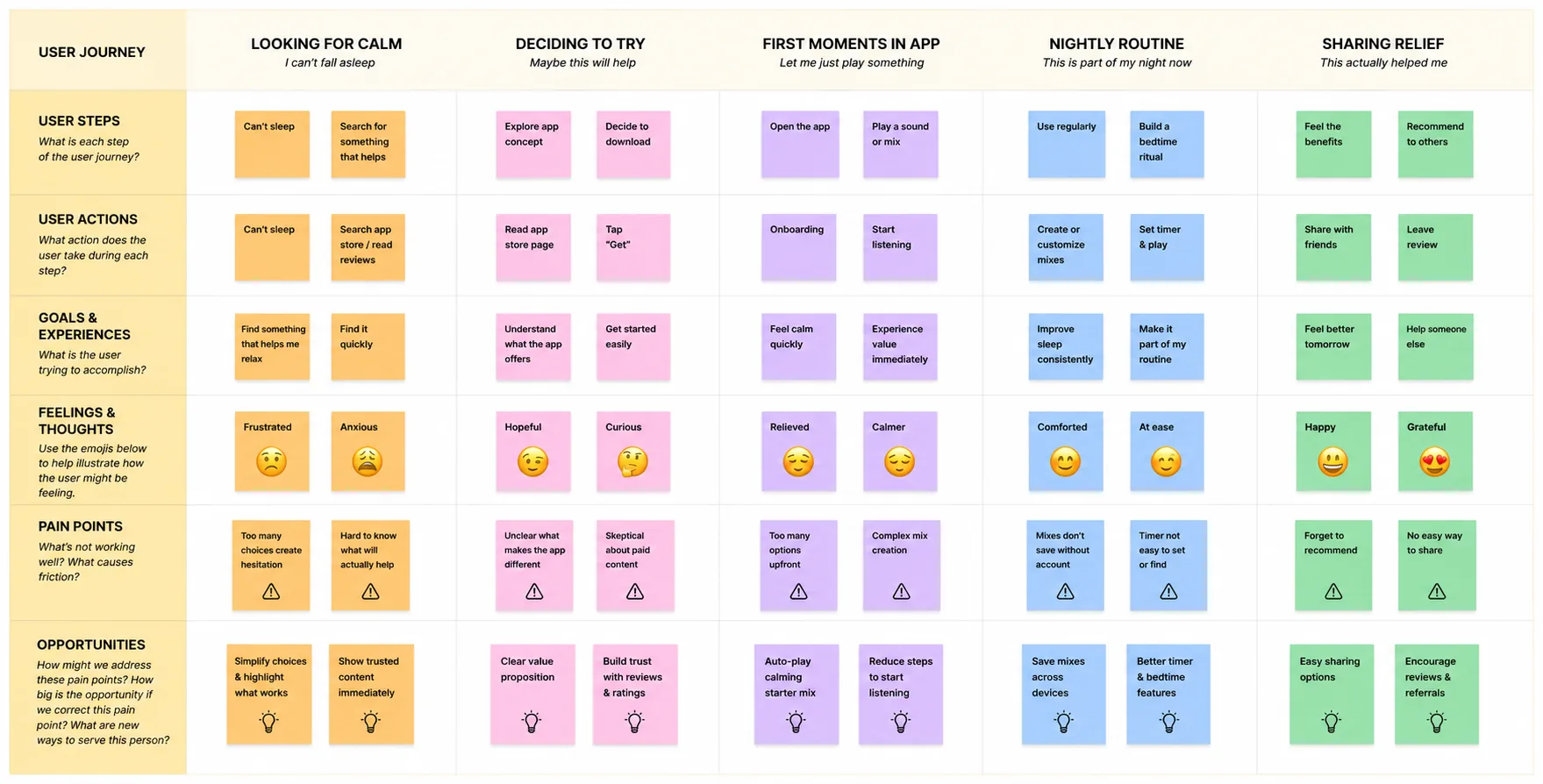
Several decisions were driven by a single principle:
Reduce cognitive load and help users reach calm faster.
Simplified Subscription Experience
Instead of presenting users with five different purchase options, the paywall now highlights one recommended plan while keeping alternative options accessible through a secondary path. This reduced choice overload during a critical conversion moment.
Earlier Value & Monetization Validation
The anonymous listening period was reduced from 36 hours to 1 hour. The goal was to validate whether reaching the monetization moment earlier would improve conversion while the product's value was still fresh in the user's mind.
Soft Registration Triggers
Rather than forcing account creation upfront, anonymous users could continue listening freely but were limited to saving a single custom mix. This created a more natural incentive to register based on value rather than interruption.
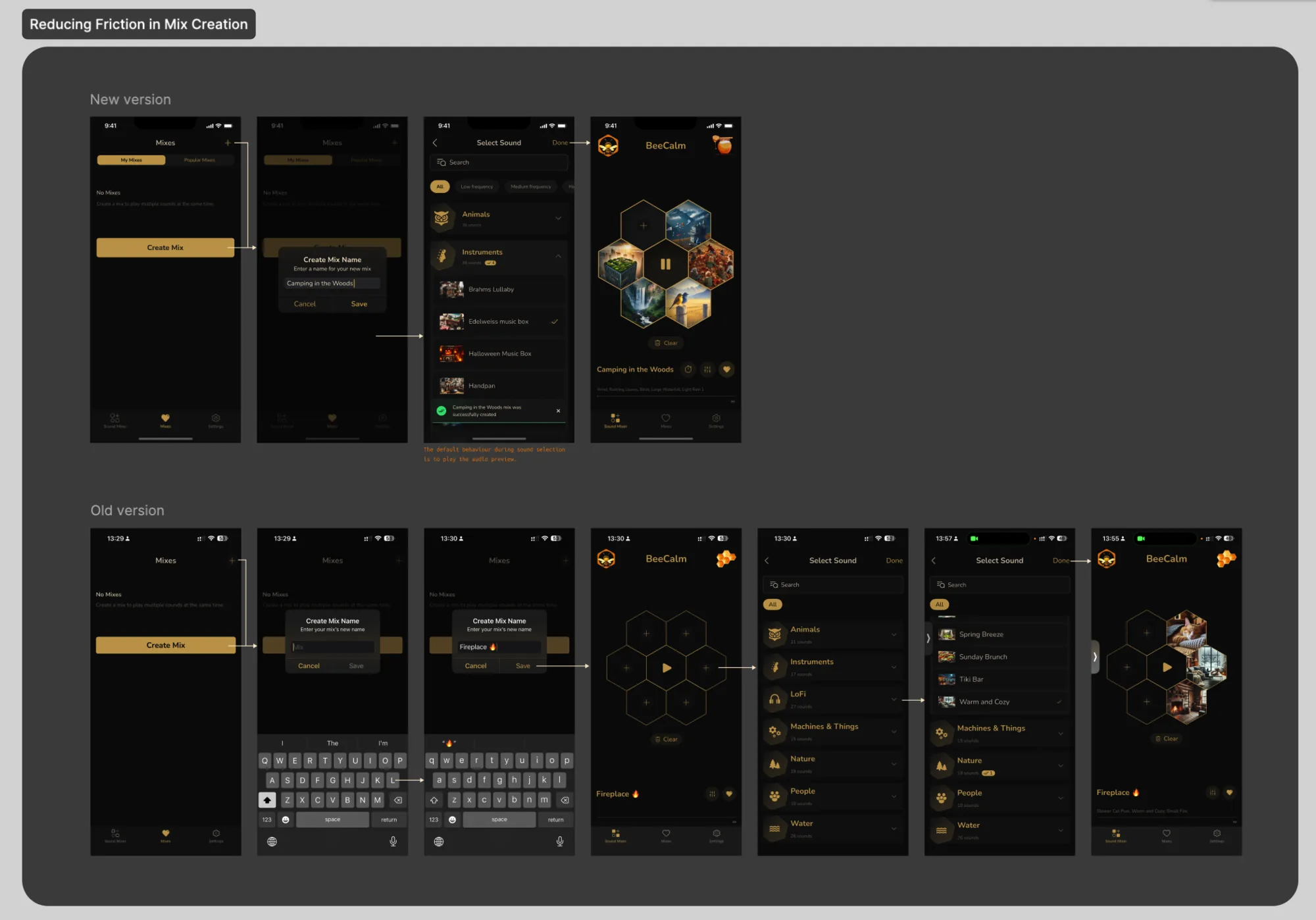
Streamlined Mix Creation
The sound mixing experience was redesigned to reduce unnecessary interactions, simplify content management, and decrease the number of steps required to create and edit mixes.
Supporting Bedtime Routines
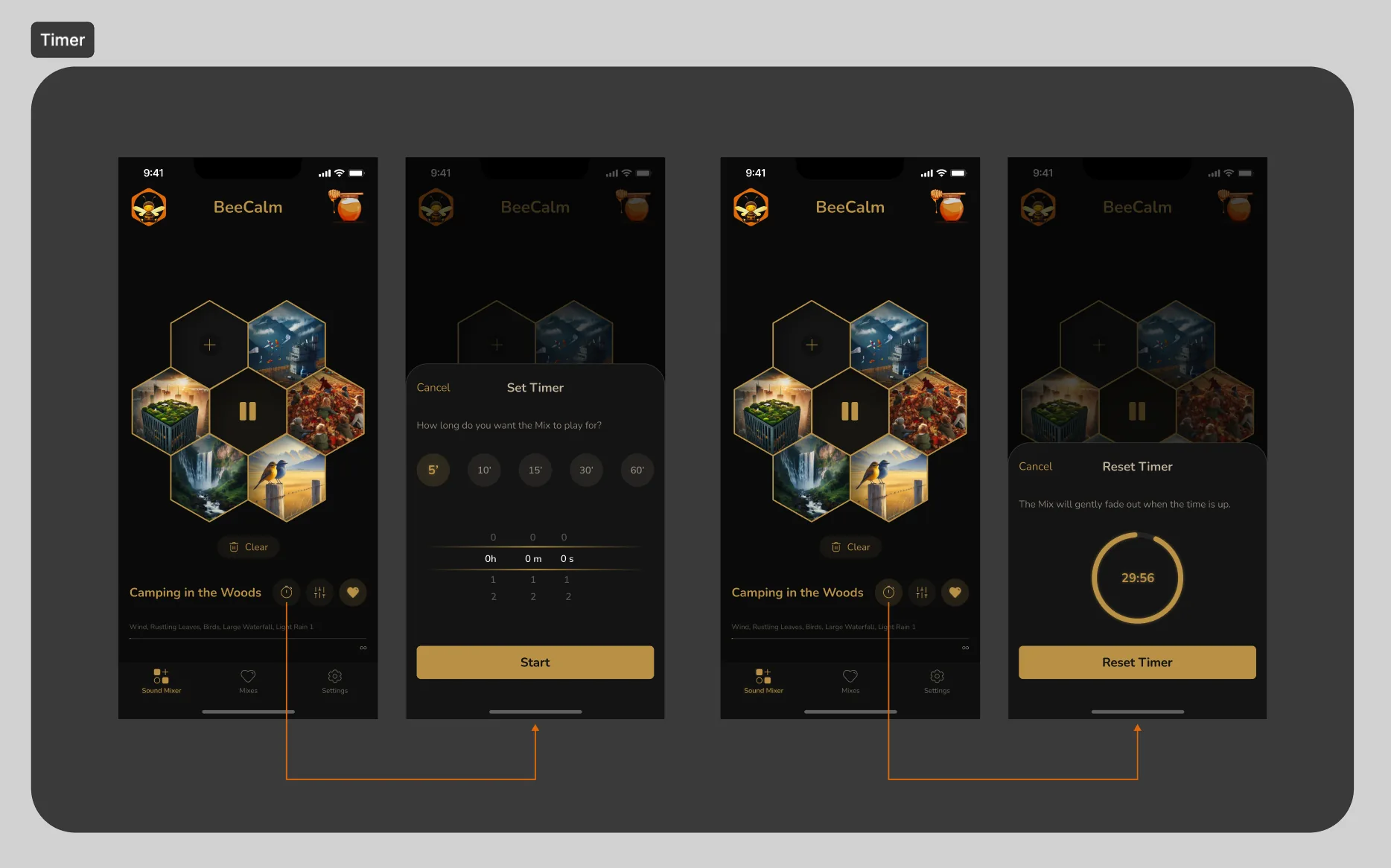
A new Sleep Timer feature was introduced, allowing playback to stop automatically in the background and supporting one of the most common user scenarios.
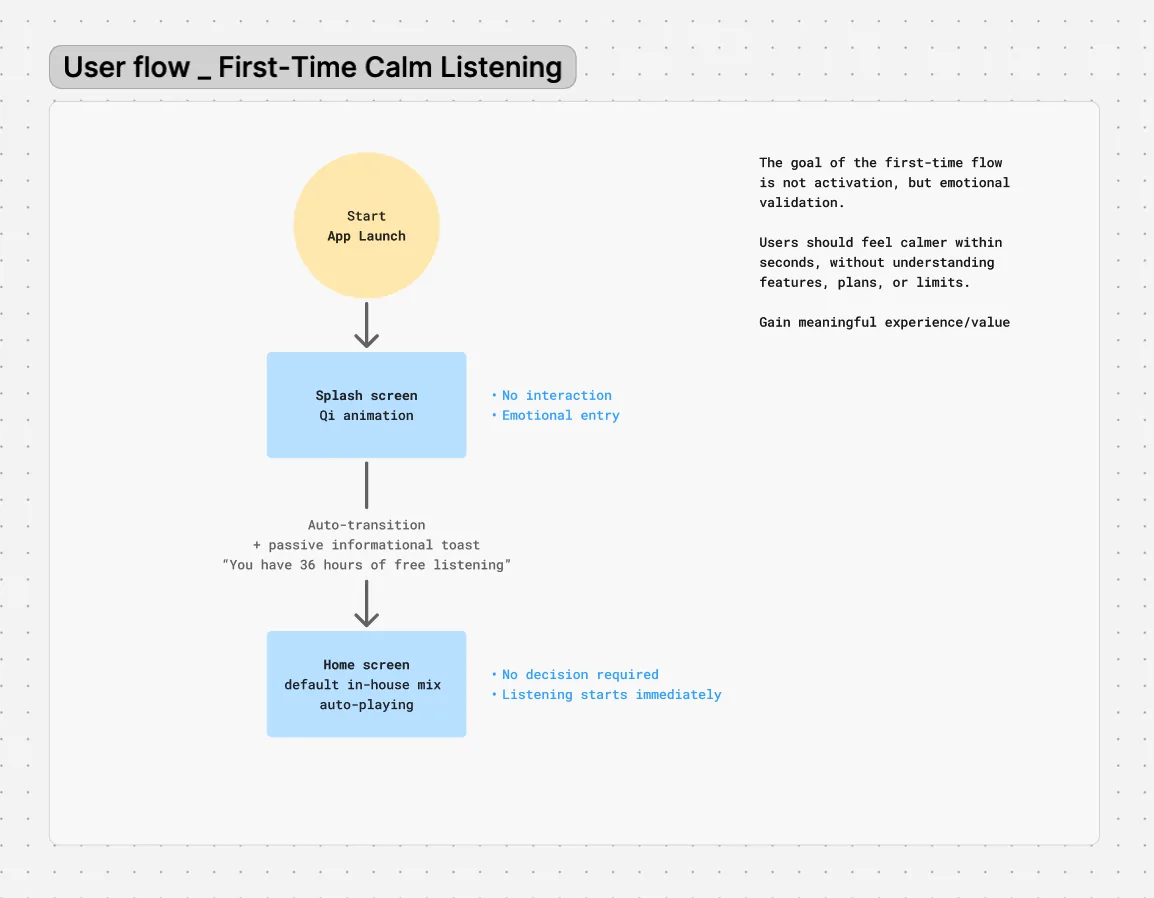
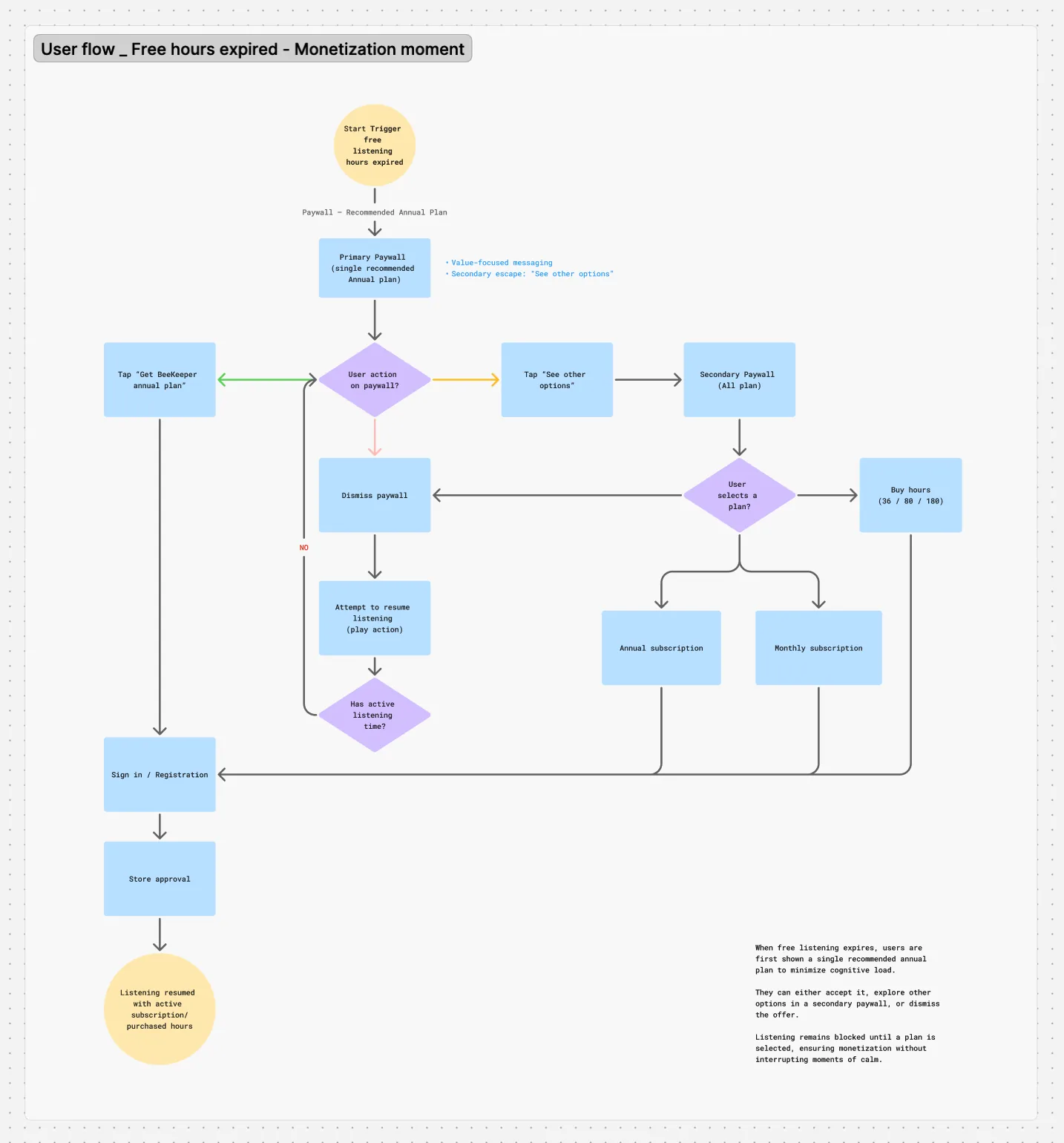
The redesign aligned the product experience more closely with the user's primary goal:
Achieving calm with minimal effort.
Subscription decisions became easier to navigate, content personalization required fewer interactions, and bedtime routines were better supported through new functionality.
At the same time, the introduction of analytics infrastructure provided visibility into the complete user journey, enabling the team to measure behavior and make future product decisions with confidence.
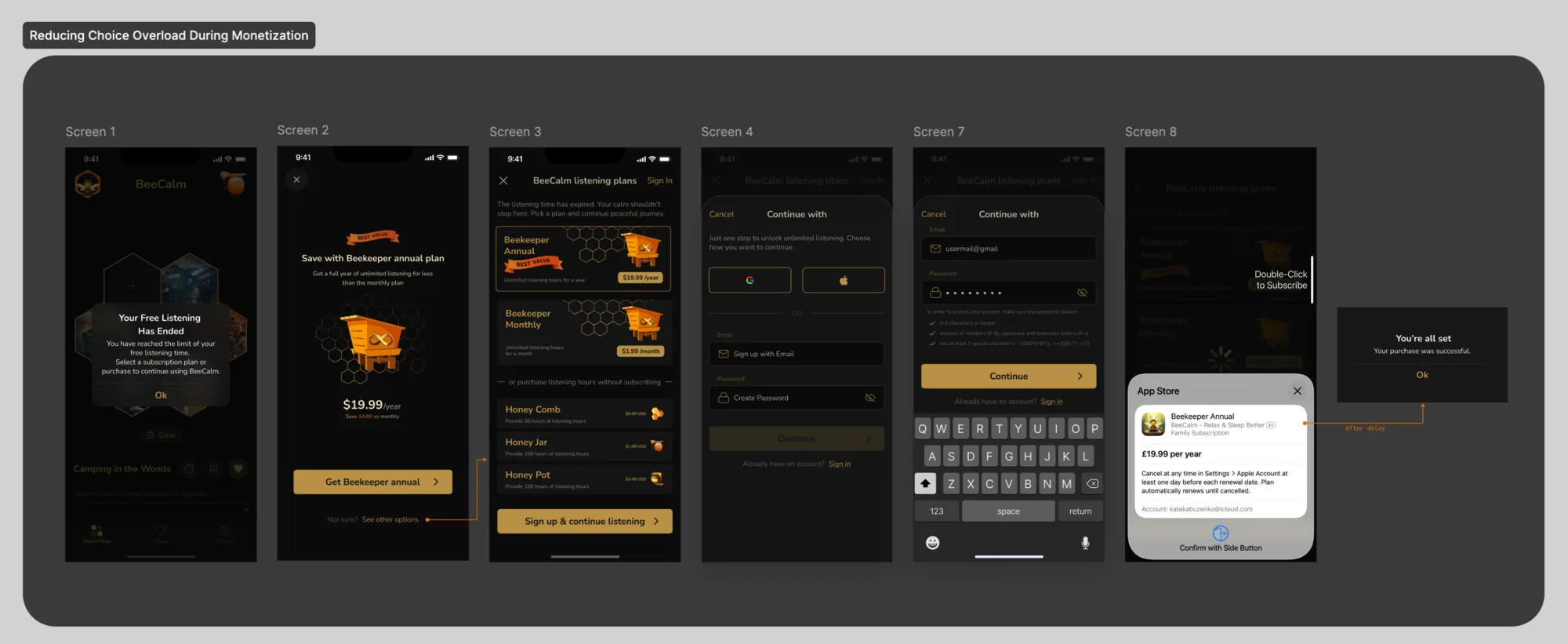
The redesign reduced cognitive load across key moments of the experience while establishing the product's first analytics foundation for future growth.
